Asia’s monsoon season is one of the most powerful weather events on the planet. Every year, it nourishes the fields that feed billions, replenishes vital water systems, and supports entire economies. Yet, this same weather cycle can also turn deadly — causing floods, landslides, displacement, and widespread destruction. Understanding the mechanics of the monsoon, its global implications, and how it’s changing under climate pressure is essential to grasping the future of Asia’s weather.
What Is a Monsoon?
A common misconception is that a monsoon refers to heavy rain. In reality, a monsoon is a seasonal reversal in wind direction that drives dramatic shifts in weather — particularly rainfall. This shift is driven by temperature differences between the land and the ocean, and it’s most pronounced across South and Southeast Asia.
During the Southwest Monsoon (typically June to September), hot air over the Asian landmass pulls in moisture-laden winds from the Indian and Pacific Oceans. As this humid air rises over the land, it cools and condenses, unleashing powerful downpours. In contrast, the Northeast Monsoon (from November to February) brings drier, cooler air from the Asian interior, affecting Southeast Asia and the Pacific islands.
Why the Monsoon Matters So Much
More than half the global population lives in regions directly influenced by the Asian monsoon. For countries like India, Bangladesh, Vietnam, Thailand, and Indonesia, this weather pattern determines not just crop yields, but energy generation, groundwater reserves, and drinking water supplies.

In India alone, around 60% of agriculture is rain-fed, making farmers particularly dependent on timely and adequate monsoon rains. The economy, which includes everything from food processing to textile manufacturing, is highly sensitive to variations in monsoon behaviour. A weak monsoon season can result in droughts, food shortages, and reduced GDP growth. A strong one — especially if it arrives suddenly — can cause floods and infrastructural collapse.
The Destructive Power of the Monsoon
The sheer volume of rain delivered by the monsoon can be overwhelming. In urban areas like Mumbai, Manila, and Jakarta, drainage systems frequently collapse under the weight of downpours, resulting in submerged streets, power outages, and property damage.
In rural areas, intense rainfall over sloped terrain often triggers landslides, cutting off communities and claiming lives. In 2022, Pakistan faced one of the worst monsoon disasters in its history, with over 33 million people affected, entire villages swept away, and vast areas of farmland submerged.
Read more on Pakistan’s monsoon disaster
These events are becoming more frequent and severe — a worrying trend that raises serious climate adaptation questions.
The Science Behind Monsoon Shifts
A range of global and regional factors influence the strength and timing of monsoons, including:
- El Niño and La Niña: El Niño typically weakens the monsoon, while La Niña strengthens it.
- Indian Ocean Dipole (IOD): This phenomenon alters sea surface temperatures and can intensify or suppress rainfall.
- Himalayan snow cover: Snowpack levels can affect land temperature and air flow, disrupting the timing and strength of seasonal winds.
According to data from the Indian Meteorological Department and global satellite monitoring systems, monsoons in recent years have shown increased variability — shorter in duration but more intense in output. In many cases, more than 70% of a region’s annual rainfall now occurs in fewer days, creating severe flood risks.
Climate Change and the Uncertain Future
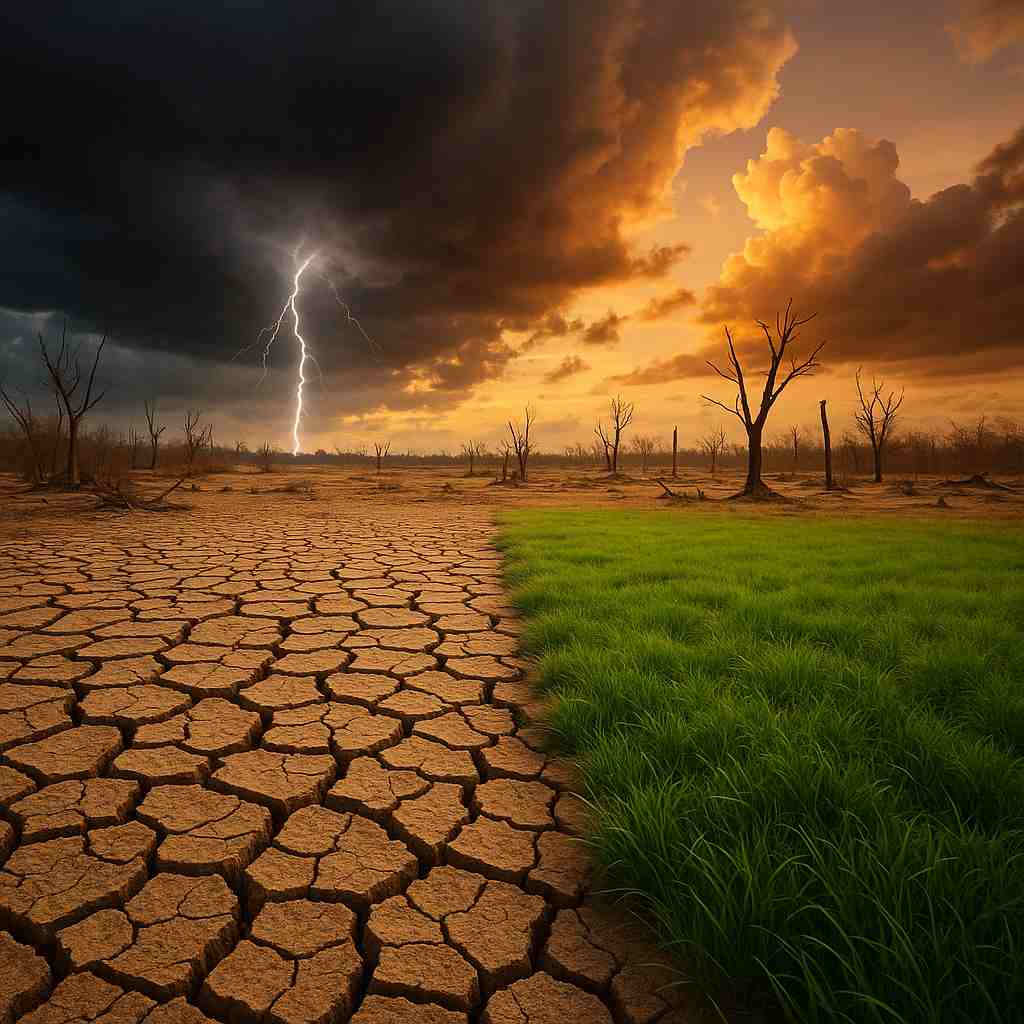
Climate change is already having a visible effect on monsoon behaviour. Rising land temperatures are increasing the atmosphere’s capacity to hold moisture, resulting in heavier downpours. At the same time, warming oceans are altering wind patterns and oceanic heat distribution, which may delay monsoon onset or cause unpredictable surges.
A troubling development is the increasing occurrence of urban monsoon disasters — where high rainfall collides with poorly designed infrastructure. Expanding cities in flood-prone zones, lack of drainage investment, and deforestation only compound the risks.
Climate modelling indicates that monsoon seasons will become more erratic and intense, potentially bringing both more droughts and more flooding depending on the region. Countries across Asia are investing in early warning systems, adaptive infrastructure, and climate-resilient agriculture, but many are still unprepared for the pace of change.
Why It Matters Globally
Monsoon variability doesn’t just affect Asia. It can ripple across the world — driving up food prices, disrupting global grain markets, and contributing to climate-driven migration. A failed monsoon in India, for instance, can impact global rice, cotton, and spice supply chains. Intense rainfall events in Asia can even shift atmospheric circulation, affecting Europe and North America’s weather indirectly.
With all the above in mind, be sure to leave your thoughts and comments in the section below.
Also, do not forget to read the following article: Tornado Alley Explained: Why the U.S. Has the Most Twisters Globally by clicking here, to learn more about this insanely distructive natural event and its impact.