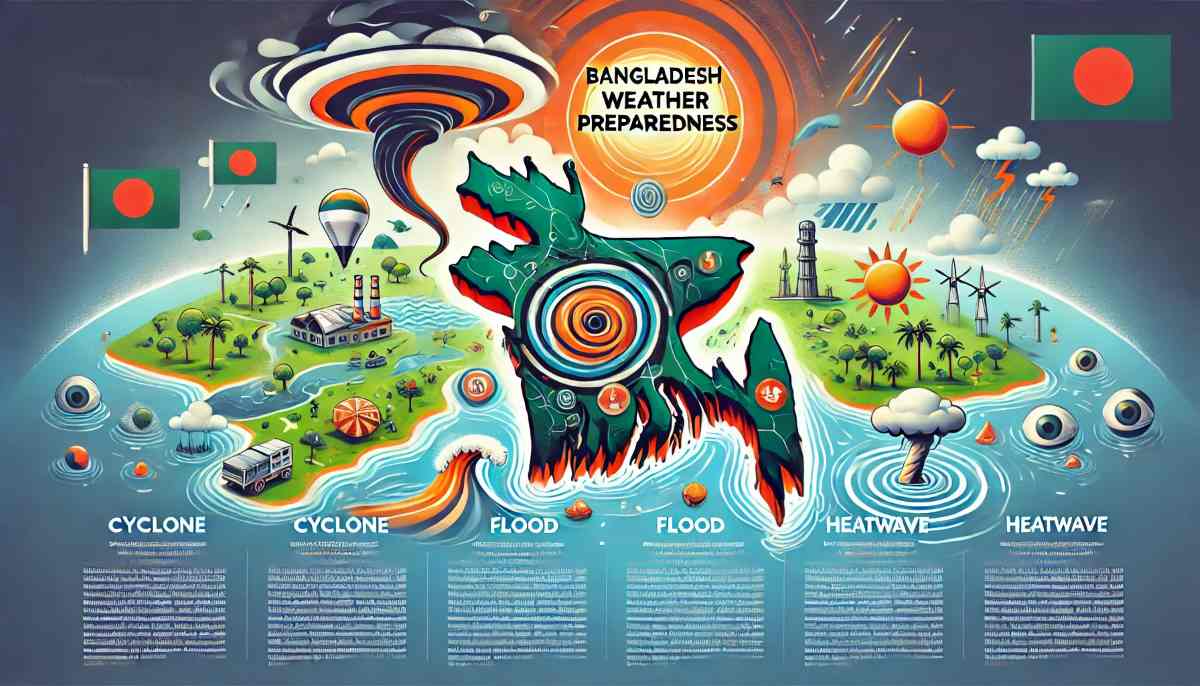
Introduction to Bangladesh Weather Preparedness
In the heart of South Asia, Bangladesh stands uniquely vulnerable to natural disasters, primarily due to its geographical positioning and climatic influences. As a nation cradled by the mighty deltas of the Ganges, Brahmaputra, and Meghna rivers, it faces an annual onslaught of severe weather events—from raging cyclones to overwhelming floods and scorching heatwaves. This guide delves deep into Bangladesh’s weather preparedness strategies, showcasing how advanced planning, community resilience, and technological innovations are pivotal in safeguarding lives and livelihoods. Here, we explore the measures that Bangladesh has implemented to combat these natural adversities, ensuring that its people are not just survivors, but well-prepared defenders against nature’s unpredictability.
Key points in this article:
- Comprehensive Weather Threats Overview: Detailed insights into Bangladesh’s primary weather challenges, including cyclones, floods, and heatwaves, highlighting historical impacts and current threats.
- Advanced Preparedness Strategies: Exploration of effective disaster management techniques such as early warning systems, cyclone-resistant infrastructure, and community-based flood defenses to significantly reduce the impact of natural disasters.
- Adaptation and Resilience Building: Discussion on long-term strategies for heatwave mitigation and drought management, including public health initiatives and sustainable agricultural practices.
- Community and Government Collaboration: Highlighting successful examples of anticipatory financing and comprehensive national planning that enhance community resilience and proactive disaster preparedness.
This guide is centered around Bangladesh Weather Preparedness, offering strategic insights into disaster management and effective preparedness techniques that have been proven to reduce fatalities and safeguard communities against cyclones, floods, and heatwaves.
Bangladesh Weather Preparedness: Understanding Weather Threats
- Cyclones: Bangladesh is frequently hit by cyclones that originate in the Bay of Bengal, affecting millions. The deadliest, the 1970 Bhola cyclone, claimed about 300,000 lives, highlighting the region’s vulnerability. Recent advancements, such as during cyclone Sitrang in 2022, where fatalities were limited to 35, demonstrate significant improvements in disaster response and preparedness due to enhanced early warning systems and better community readiness (source: ICCCAD report).
- Floods: With over 80% of the country on a floodplain, annual floods during the monsoon season (June to September) are a significant concern. These events disrupt lives, destroy crops, and damage infrastructure, exemplified by the 2020 floods affecting over 4 million people (source: Al Jazeera English).
- Heatwaves and Droughts: The frequency and intensity of heatwaves are on the rise due to global warming, with severe implications for public health and agriculture. Droughts particularly affect the northwest, impacting water availability and agricultural productivity, necessitating innovative approaches to water management and crop resilience.
Cyclone Preparedness

Effective preparedness strategies are critical to reducing the impact of cyclones:
Early Warning Systems:
- The Cyclone Preparedness Programme (CPP) in Bangladesh, established in 1972, plays a pivotal role in mitigating cyclone impacts through its vast network of over 55,000 volunteers. These volunteers are integral to the CPP’s effectiveness, delivering early warning messages across 13 coastal districts, reaching communities that are most at risk. This extensive volunteer network ensures rapid dissemination of warnings via multiple communication channels, including megaphones and local mosque loudspeakers, which are vital for timely evacuations and minimizing casualties during cyclone events.
Infrastructure:
- In terms of infrastructure resilience, Bangladesh has constructed more than 4,000 multipurpose cyclone shelters that serve as safe havens during cyclones and double as schools or community centers in calmer times. These shelters are strategically located to maximize accessibility for coastal populations vulnerable to storm surges and high winds. The dual use of these structures not only provides immediate safety during cyclones but also supports community development through educational and social activities during non-emergency periods.
Home Safety:
- On the home safety front, Bangladesh promotes the construction of cyclone-resistant buildings by incorporating robust materials such as reinforced concrete and securely bound bamboo. Additionally, the emphasis on elevated foundations is crucial in protecting homes against storm surges. These building standards are part of a broader strategy to enhance structural resilience against frequent and intense cyclones, thereby safeguarding lives and reducing economic losses.
Flood Prevention Strategies
Flood Barriers:
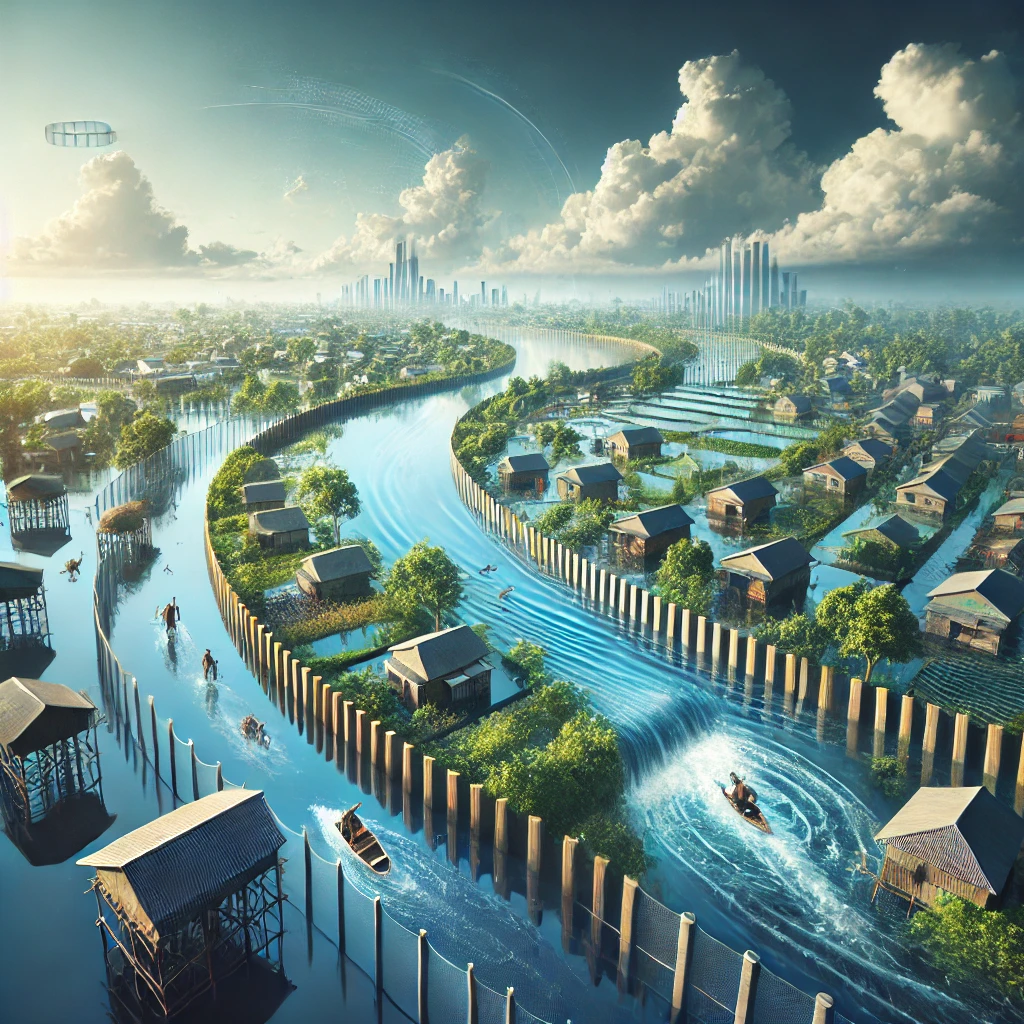
- Bangladesh has significantly advanced its flood management strategies by expanding the use of polders and embankments. These structures are crucial in protecting vast areas from flooding, including millions of hectares of agricultural land and densely populated regions. The Coastal Embankment Improvement Project (CEIP), supported by the World Bank, has been instrumental in upgrading embankments and enhancing the resilience of the coastal zone to tidal flooding and storm surges, protecting over 400,000 people and increasing agricultural productivity
Resilient Housing:
- Encouraging the construction of homes on raised platforms is a key strategy in Bangladesh’s flood preparedness efforts. This approach ensures that housing remains above flood levels, thereby minimizing property damage and facilitating quicker recovery after flooding events. This practice is part of broader efforts to enhance structural resilience and safeguard communities against the increasing threat of flooding due to climate change
Emergency Preparedness:
- Bangladesh emphasizes the importance of well-equipped emergency kits for flood scenarios. These kits typically include non-perishable food, clean water, first aid supplies, and waterproof storage for important documents. This preparation is essential for ensuring that individuals and families can sustain themselves during initial flood impacts and is a critical component of the national disaster preparedness strategy
Heatwave and Drought Protection

Adapting to increased heatwaves and prolonged drought periods involves:
Public Health Initiatives:
- Bangladesh has implemented significant measures to enhance public awareness of heatwave risks and promote strategies to avoid heat-related illnesses. The Heatwave Alert Portal, developed by the Regional Integrated Multi-Hazard Early Warning System (RIMES) and Save the Children, is a key initiative. This portal provides advanced heatwave condition mapping and forecasting, helping the Bangladesh Meteorological Department (BMD) issue timely alerts. Public cooling centers have also been established in heatwave-prone areas by Dhaka North City Corporation (DNCC), offering respite to vulnerable populations, particularly outdoor workers like day laborers.
Sustainable Agriculture:
- To combat the adverse effects of prolonged drought periods, Bangladesh has promoted the introduction of drought-resistant crop varieties and sustainable water management techniques. Efficient irrigation systems and rainwater harvesting are encouraged to ensure water availability during dry spells. These initiatives help maintain agricultural productivity even under challenging climatic conditions
Bangladesh Weather Preparedness: Community and Government Collaboration
- Financial Preparedness: Implementing anticipatory financing models, like the EU-funded cash assistance before cyclone Remal in 2024, enables communities to prepare more effectively, reducing the overall impact and cost of disasters (source: European Commission).
- Comprehensive Planning: The National Adaptation Plan (2023-2050) illustrates a robust framework for integrating climate resilience into national and local planning processes, emphasizing the importance of community involvement and forward-thinking strategies.
Long-term Resilience
- To enhance long-term resilience against climate challenges in Bangladesh, BBC Media Action’s “Amrai Pari” program plays a vital role. This reality TV show has effectively educated communities on preparedness and adaptation strategies for natural hazards, reaching an estimated 22.5 million people. It emphasizes local collaboration and government support, significantly boosting community resilience. Nearly 80% of viewers reported better understanding and preparedness for extreme weather events, with nearly half taking concrete actions following the program
- Additionally, leveraging advanced technologies like artificial intelligence (AI) can significantly improve weather prediction and agricultural planning. AI tools help analyze vast data sets on weather patterns and climate impacts, offering precise forecasts and actionable insights for farmers and policymakers. This technology is imperative for developing adaptive strategies that enhance crop resilience and optimize water use during unpredictable weather conditions
Bangladesh Weather Preparedness: Summary on this extensive topic
As Bangladesh continues to advance in its battle against climate impacts, the journey is far from over. The successes of educational programs like BBC Media Action’s “Amrai Pari” and cutting-edge technologies in weather prediction showcase the power of community and innovation. However, the real strength lies in our collective action. Each of us has a role to play.
By engaging with local environmental initiatives, supporting sustainable policies, and integrating climate-conscious practices into our daily lives, we can amplify the impact of national programs. Let us not be mere spectators but active participants in crafting a resilient future for this beautiful country. The time to act is now—every small effort counts towards building a climate-resilient Bangladesh.
Have you read, “Insider’s Travel Guide: Best Times to Visit Maui, Whistler, Patagonia, and Amsterdam”, if not, be sure to click here.