
Content Goals:
- Educate on the historical changes in LA’s climate.
- Illustrate the impact of urbanization on local weather.
- Highlight AI’s role in predicting future climate scenarios.
- Inspire action for climate resilience.
In this article, journey through climate change in Los Angeles, California over the decades, noting how the weather patterns have changed. Jointly, using the power of AI, we establish what the future holds for this beloved global destination hot spot.
Climate Change in Los Angeles: Historical Weather and Future Projections
Climate Change in Los Angeles – Early 20th Century Weather Patterns (1900s – 1920s)
At the beginning of the 20th century, Los Angeles epitomized the Mediterranean lifestyle, with its mild winters and sun-drenched summers. The city’s natural vegetation, vast and lush, moderated temperatures, creating a cooler environment through the phenomenon known as “June Gloom,” where coastal fog provided a soothing relief from the heat. This era was the benchmark for what would be a dramatic shift due to climate change in Los Angeles.
Key Features of Climate Change in Los Angeles
Los Angeles, a city renowned for its diverse and dynamic natural landscapes, experiences a climate significantly influenced by the intricate interaction between its coastal environment and inland terrains. The geographical setting, featuring a close proximity to the Pacific Ocean, plays a pivotal role in moderating the city’s climate. This ocean-land interplay helps to stabilize temperature fluctuations and ensures a generally mild and agreeable climate, which has historically contributed to Los Angeles being considered a desirable place to live.
However, the impacts of climate change are increasingly altering this balance, leading to a range of environmental challenges. Rising temperatures, more frequent and intense heatwaves, and prolonged drought periods are becoming more common, straining water resources and increasing the risk of wildfires. Additionally, the coastal areas of Los Angeles are facing rising sea levels and increased coastal erosion, threatening infrastructure and natural habitats.

The interaction between the ocean and the land, while once a stabilizing force, is now a conduit for more extreme weather patterns, reflecting the broader impacts of global climate change. These shifts demand significant adjustments in how the city manages its natural resources, urban planning, and disaster preparedness strategies to mitigate the adverse effects and safeguard the well-being of its residents.
Climate Change in Los Angeles – Mid-20th Century Local Weather Shifts (1930s – 1950s)
The urban sprawl of Los Angeles altered its climate significantly. The urban heat island effect emerged as concrete replaced greenery, pushing up local temperatures. Rainfall became less predictable, and droughts became more frequent, signaling the onset of climate change in Los Angeles.
Urbanization’s Impact on Climate Change in Los Angeles
The city’s growth increased water demands, putting pressure on resources as the population expanded, highlighting human influence on local weather patterns.
Climate Change in Los Angeles – Late 20th Century Extremes (1960s – 1980s)
During this period, Los Angeles faced environmental extremes. Smog became a notorious part of daily life, reflecting high pollution levels from industrialization and traffic. El Niño events introduced heavy rains, challenging the city’s infrastructure and response to climate change in Los Angeles.

Environmental Health Amid Climate Change in Los Angeles
The era underscored the need for better air quality and water management strategies as climate change impacts grew more evident.
Climate Change in Los Angeles – The Turn of the Millennium (1990s – 2000s)
Technological advancements in meteorology improved forecasting, aiding in disaster preparedness for climate change in Los Angeles. However, the city experienced record high temperatures, indicating an ongoing trend of global warming.
Technological Impact on Managing Climate Change in Los Angeles
Los Angeles has increasingly turned to technology to manage the growing challenges posed by climate change. Technological advancements have played a crucial role in enhancing the city’s ability to forecast, respond to, and mitigate the effects of climate disruptions, particularly in terms of weather predictions and water management.
Enhanced Forecasting Technologies
Advances in meteorological technology have significantly improved the accuracy of weather forecasts in Los Angeles. High-resolution satellite imaging and predictive modeling allow meteorologists to track weather patterns more closely and predict changes with greater precision. For example, the use of Doppler radar systems has been crucial in detecting and monitoring severe weather events, such as the atmospheric rivers that occasionally bring heavy rains to Southern California. These technologies enable early warnings for storms, which are vital for preparing flood defenses and issuing evacuations where necessary.
Impact of Warming Trends
Despite these technological advancements, Los Angeles continues to experience a pronounced warming trend. Research from UCLA’s climate science department indicates that average temperatures in the city have risen by several degrees over the past century. This warming trend exacerbates the urban heat island effect, where city regions become significantly warmer than their rural surroundings due to human activities and extensive concrete surfaces. To combat this, Los Angeles has initiated projects like the Cool Streets LA program, which involves painting streets with a reflective coating to reduce temperatures in urban areas.
Water Management Innovations
Technological innovation has also been critical in addressing the sporadic nature of drought and rainfall in Los Angeles. The city employs sophisticated water reclamation facilities that treat wastewater to safe standards, allowing it to be reused for irrigation and industrial purposes. Additionally, sensor-based irrigation systems are increasingly used in public and private landscapes to optimize water use by adjusting watering schedules based on soil moisture levels and weather forecasts.
Examples of Technology in Action
One notable project is the use of cloud seeding technology, which Los Angeles has explored to enhance precipitation during wet years. By dispersing substances into the air that encourage cloud condensation, this technology aims to increase rainfall, thereby replenishing reservoirs and groundwater supplies. Moreover, Los Angeles is investing in smart grid technologies that integrate renewable energy sources like solar and wind power, reducing the city’s reliance on fossil fuels and decreasing its greenhouse gas emissions.
Research and Future Directions
Ongoing research into climate models at institutions like the Jet Propulsion Laboratory (JPL) in Pasadena continues to refine our understanding of how climate change will specifically impact Los Angeles. These models predict not only temperature changes but also potential shifts in precipitation patterns, helping the city plan for future water resource management. As part of its long-term strategy, Los Angeles is looking towards further integrating artificial intelligence and machine learning to predict and mitigate the impacts of climate change more effectively.
In summary, while technology has provided Los Angeles with tools to better manage the effects of climate change, the city faces ongoing challenges due to persistent warming trends and irregular rainfall patterns. Continued investment in technology and research is essential for adapting to these changes and safeguarding the environment and its inhabitants.
Climate Change in Los Angeles – The Current Local Weather Climate (2010s – Today)
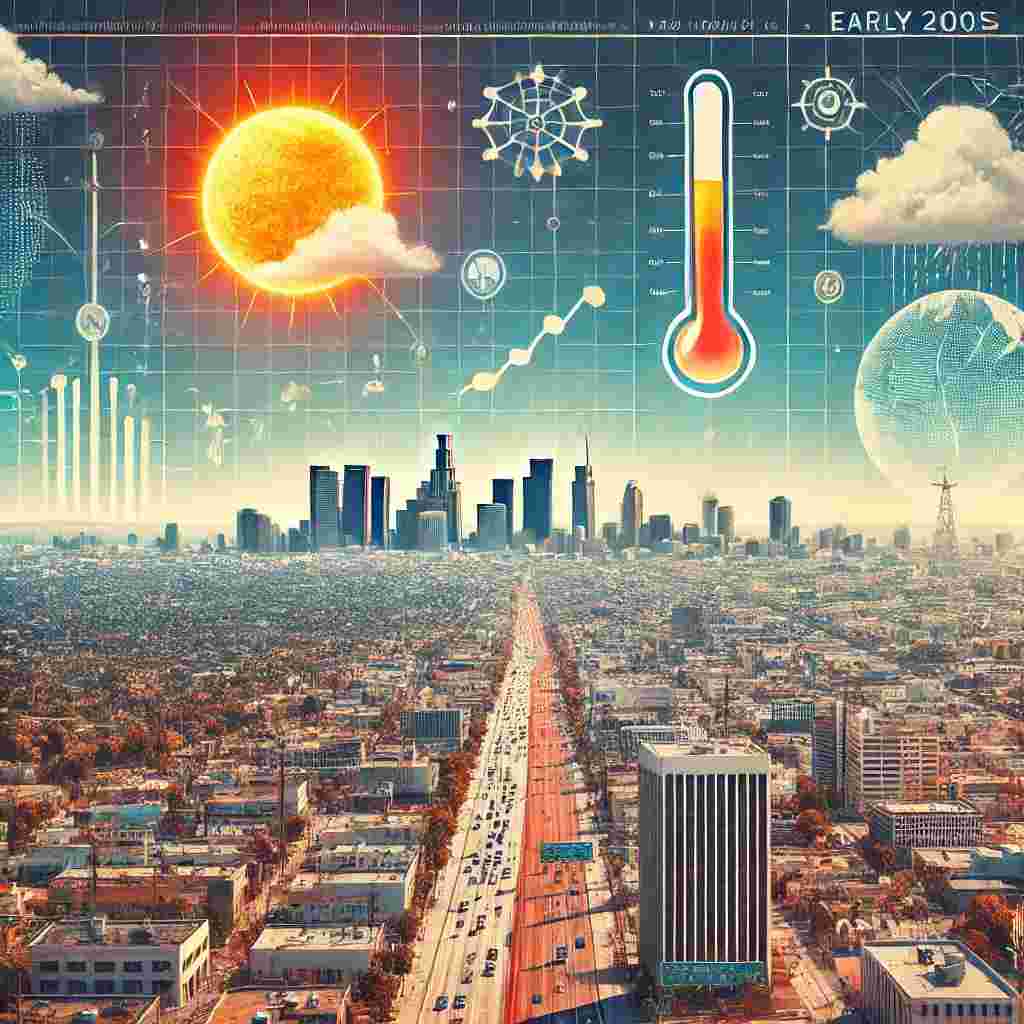
The last two decades have seen the effects of climate change in Los Angeles become more pronounced. Wildfires, intensified by drought and urban heat, have become more common. The city has responded with resilience strategies, including expanding green spaces and promoting water reuse.
Modern Challenges of Climate Change in Los Angeles
As Los Angeles grapples with the multifaceted challenges posed by climate change, the city has shifted its focus towards enhancing resilience through a series of strategic initiatives aimed at reducing fire risks and managing water resources more sustainably amidst increasingly erratic weather patterns.
Reducing Fire Risks
Wildfires pose a significant threat to Los Angeles, exacerbated by climate change through hotter temperatures and drier conditions. To combat this, Los Angeles has implemented several fire risk reduction strategies. These include maintaining and expanding urban green spaces to serve as natural firebreaks, enforcing stringent building codes that require fire-resistant materials, and improving early warning systems. Technology plays a crucial role here, with initiatives like the deployment of drones for real-time fire surveillance and the use of AI to predict fire spread patterns based on historical data and current conditions.
Additionally, community-focused programs have been developed to educate residents on preventive measures and emergency preparedness. These programs often focus on brush clearance regulations and the importance of creating defensible spaces around properties, particularly in wildfire-prone areas.
Sustainable Water Management
Los Angeles’s approach to water management reflects a broader acknowledgment of the need for sustainability in an era of fluctuating weather conditions. The city has invested heavily in infrastructure to capture and reuse stormwater, turning seasonal rains into a valuable resource rather than a flood risk. Projects like the Enhanced Watershed Management Program aim to improve water quality and increase water supply reliability through innovative solutions such as permeable pavements and rain gardens, which help replenish groundwater supplies.
The city also promotes water conservation through public awareness campaigns and incentives for installing water-efficient appliances and fixtures. Advanced technologies, such as smart meters, are increasingly used to monitor water usage in real-time, allowing for more precise management and reducing wastage.
Addressing Urban Heat
The urban heat island effect, where urban regions become significantly warmer than their rural surroundings, is another challenge exacerbated by climate change. Los Angeles is addressing this through initiatives aimed at increasing urban albedo (reflectivity) and enhancing green canopy coverage. The CoolRoofs program, for example, encourages property owners to install reflective roofing materials that reduce indoor temperatures and lower cooling demands. Similarly, the expansion of urban forestry initiatives not only cools the city but also improves air quality and provides recreational spaces for residents.
Engaging the Community
Recognizing that resilience is not just about infrastructure but also about community engagement, Los Angeles has developed platforms for public participation in climate resilience planning. These include workshops, forums, and digital platforms that encourage residents to contribute ideas and feedback on local climate initiatives. These efforts ensure that the city’s strategies are inclusive and address the needs of diverse communities.
Future Outlook
As Los Angeles continues to develop its resilience strategies, it remains focused on integrating new technologies and scientific research into its planning. The city is exploring the potential of renewable energy sources, such as solar and wind, to reduce its carbon footprint and dependence on non-renewable energy. Ongoing partnerships with academic institutions, non-profits, and private sectors are vital in this endeavor, helping to foster innovation and implement solutions that will mitigate the impacts of climate change on this sprawling metropolis.
In conclusion, Los Angeles’s response to the modern challenges of climate change illustrates a comprehensive approach to building urban resilience. By addressing fire risks, managing water sustainably, cooling the urban environment, and actively engaging the community, Los Angeles is setting a standard for cities worldwide in the fight against climate change.
Climate Change in Los Angeles: AI-Driven Forecasting and Management

Artificial Intelligence (AI) has significantly transformed the landscape of climate management in Los Angeles, offering unprecedented capabilities in forecasting and responding to climate-related challenges. By harnessing the power of AI, the city can now better predict, prepare for, and mitigate the effects of climate change.
AI-Driven Predictions in Los Angeles
AI models in Los Angeles are utilized to analyze vast amounts of climate data, from temperature trends to atmospheric moisture levels, enabling more accurate predictions of heatwaves, rainfall, and sea-level rise. These models are trained on historical climate data and real-time inputs from sensors across the city and oceanographic data from the Pacific. As a result, they can simulate potential future climate scenarios with a high degree of precision. For instance, AI has been instrumental in predicting the intensity and frequency of heatwaves in urban areas, allowing the city to implement cooling centers and public health advisories in a timely manner.
Strategic Use of AI Insights for Climate Change
The insights gained from AI are crucial for strategic urban planning in Los Angeles. City planners use AI-driven data to design infrastructure resilient to climate impacts, such as flood-resistant transportation systems and buildings that can withstand higher temperatures. AI also aids in the distribution of resources more efficiently, ensuring that water supplies are managed wisely during drought conditions and energy is conserved during peak demand periods. Moreover, AI contributes to emergency management by optimizing evacuation routes and emergency responses during extreme weather events, potentially saving lives and reducing economic losses.
Public Engagement and AI in Climate Change
AI enhances the way climate risks are communicated to the public in Los Angeles. Through mobile apps and integrated public alert systems, residents receive timely and accurate information about impending weather conditions. AI algorithms analyze weather data to send targeted alerts about heatwaves, heavy rainfall, or potential flooding, directly to users’ smartphones. This system not only informs residents about immediate risks but also educates them on longer-term climate trends, enhancing overall community preparedness.
AI-Enhanced Environmental Monitoring
In addition to forecasting and public alerts, AI plays a pivotal role in environmental monitoring. Drones equipped with AI-powered sensors are deployed to monitor air quality and detect pollutant sources, while AI-assisted satellite imagery is used to track changes in land use, vegetation cover, and coastal erosion. This real-time monitoring helps city officials and scientists understand the evolving impacts of climate change on Los Angeles’s environment and guide conservation efforts accordingly.
Future Prospects of AI in Climate Management
Looking ahead, Los Angeles plans to expand its use of AI in tackling climate change. Initiatives include developing more sophisticated AI models that can better predict the long-term impacts of climate policies and investments, and integrating AI with other technologies like IoT (Internet of Things) to enhance the city’s adaptive capabilities. The potential for AI to interact with big data and machine learning promises even more robust tools for managing the challenges that climate change poses to this vibrant urban landscape.